


New information
The Beginning of a Japan–Brazil Food Culture Exchange—COIL Project: Session 1 (Saturday, May 9)
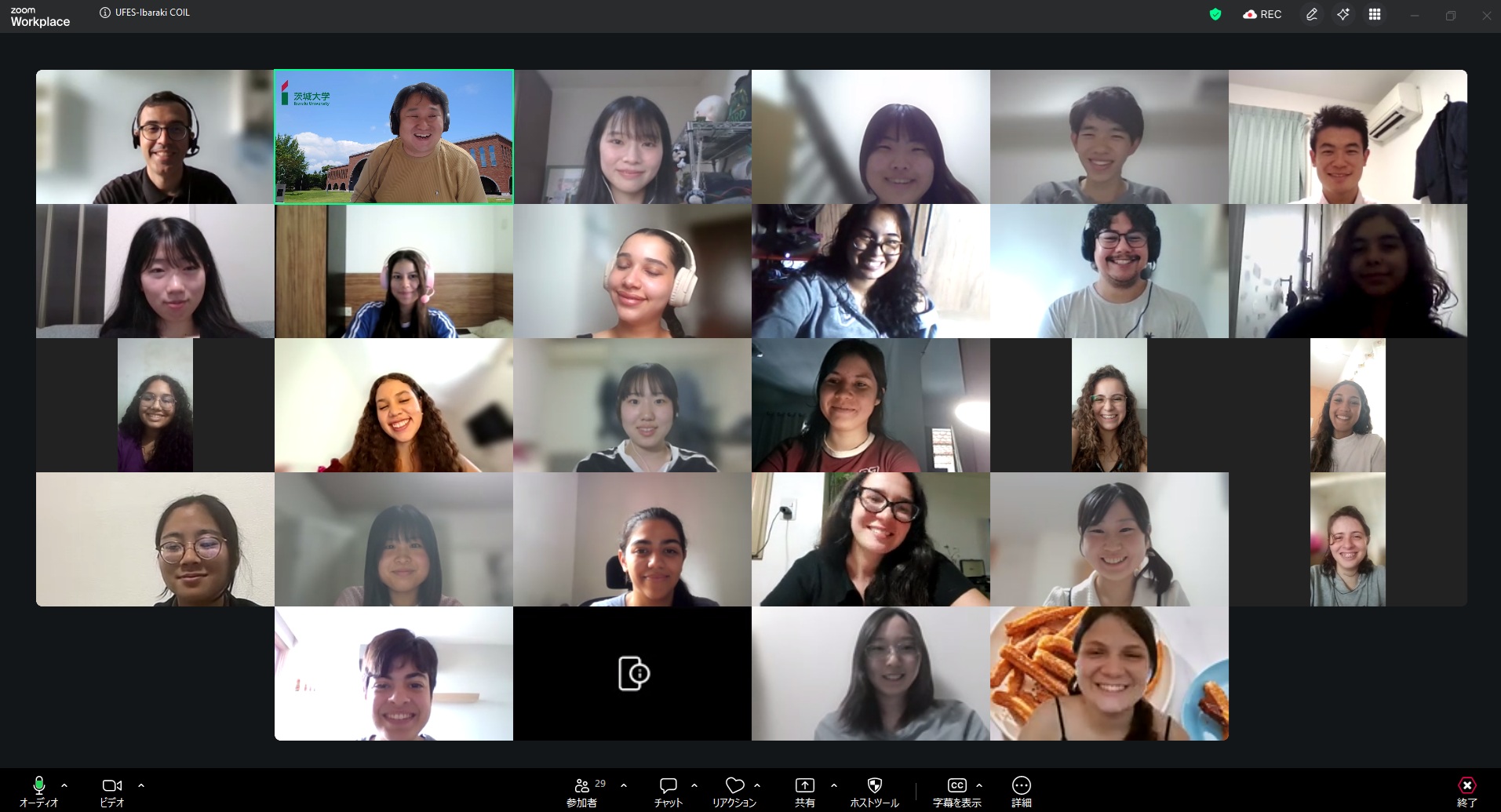
On Saturday, May 9, 2025, a COIL (Collaborative Online International Learning) project involving students from Ibaraki University (Japan) and the Federal University of Espírito Santo (UFES, Brazil) was launched. The theme of this project is “food culture,” and students from both countries will learn together through online collaboration.
In the first session, the goals and schedule of the COIL project were introduced. After confirming the significance of connecting students from different countries and regions through online learning and engaging in collaborative activities, interaction among the students began.
The main activity of the session was self-introductions and discussions in mixed Japan–Brazil groups. Students introduced themselves, including their names, majors, and interests, and also shared foods that are meaningful to them or commonly eaten in their daily lives.
Although the interaction took place online, the students actively listened to one another and made great efforts to explain their own food cultures. Japanese students introduced familiar homemade dishes such as onigiri (rice balls) and miso soup, while Brazilian students introduced foods such as pão de queijo and brigadeiro, reflecting diverse cultural backgrounds. Through the familiar theme of food, it was impressive to see how students naturally became interested in each other’s lifestyles and values.
Regarding communication in English as a common language, some students initially showed hesitation. However, they gradually became more engaged in conversation by using gestures and simple paraphrasing. It was a moment that clearly demonstrated that the willingness to communicate—to express and to understand—supports meaningful learning, even more than linguistic accuracy alone.
In the upcoming sessions, students will actually cook dishes from each other’s countries. Japanese students will teach UFES students how to prepare Japanese dishes, and in the following session, the roles will be reversed. This hands-on experience of “learning through doing,” rather than simply exchanging information, is one of the key features of this COIL project.
The first session marked a meaningful first step toward intercultural understanding and collaborative learning. It is expected that the “partners” on the other side of the screen will gradually become more familiar to one another, and that this process itself will become an invaluable learning experience for the students.