

New information
Connecting Japan and Brazil Through Food!— COIL Project: Japanese Cooking Session(Saturday, May 23)
On Saturday, May 23, 2026, Ibaraki University and the Federal University of Espírito Santo (UFES), Brazil, held an online cultural exchange activity centered on food.
This activity was conducted as part of a COIL (Collaborative Online International Learning) project within the course International Collaborative Learning (Brazil), taught by faculty members from the Global Engagement Center at Ibaraki University.
On the day of the event, participants connected across an approximate 12-hour time difference between Japan and Brazil. A total of 11 students from Ibaraki University and 12 students from UFES joined the session, participating directly from their own kitchens.
In preparation for the event, the students held two prior online sessions, during which they discussed and decided together which dishes to prepare. In addition, the Japanese students took the lead in explaining the necessary ingredients and cooking tools in English, enabling the Brazilian students to prepare in advance for the activity.
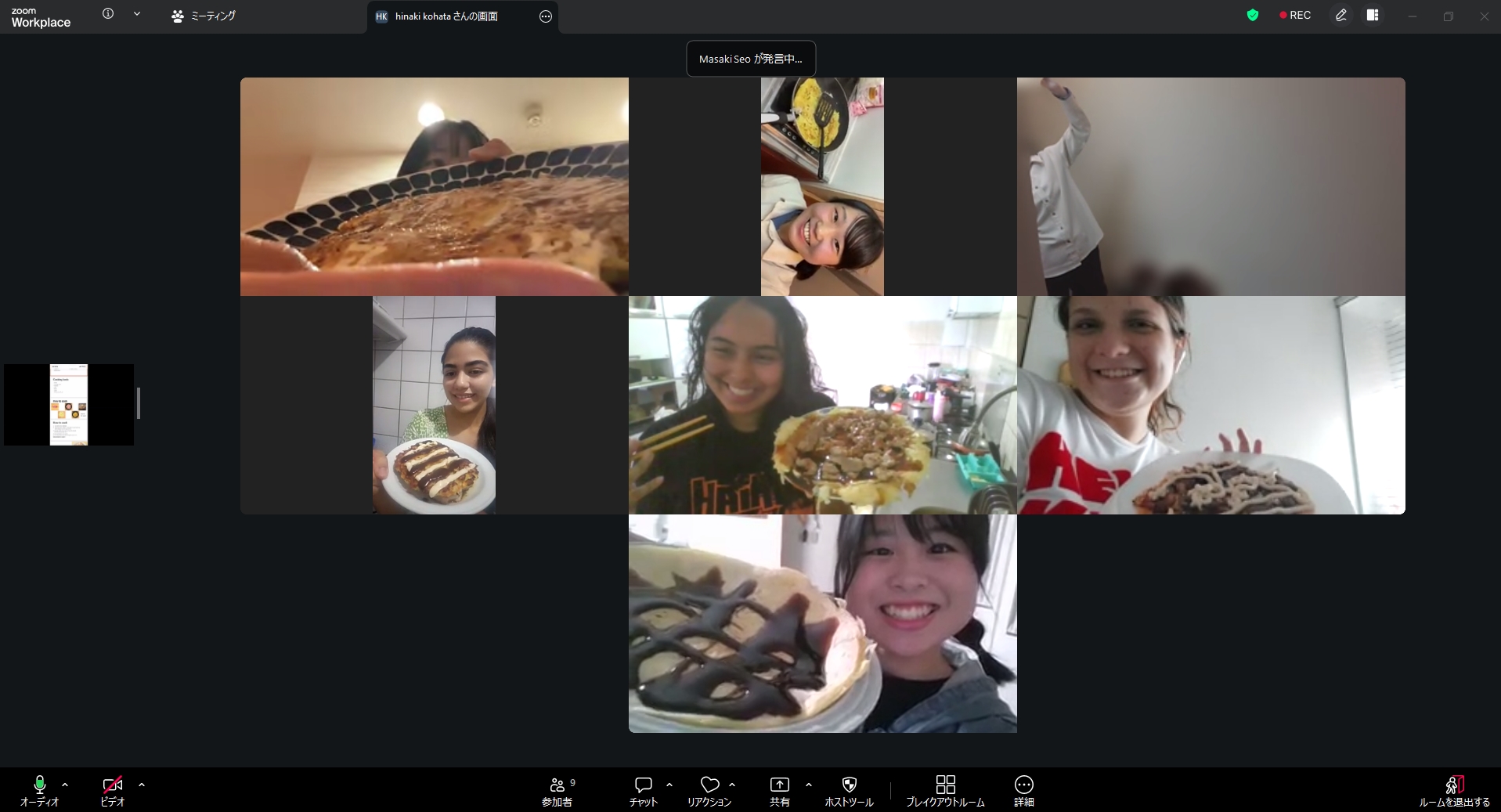
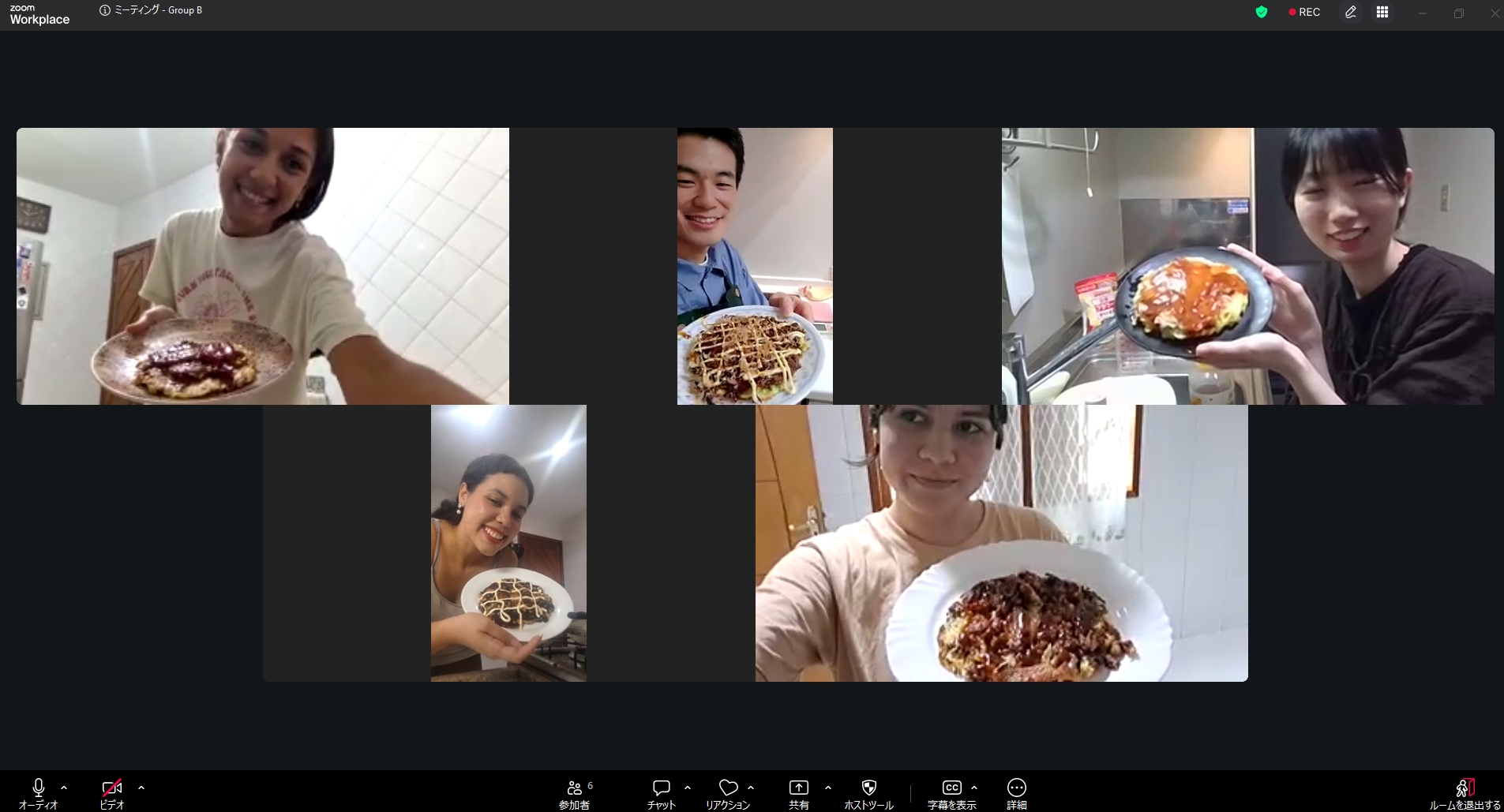
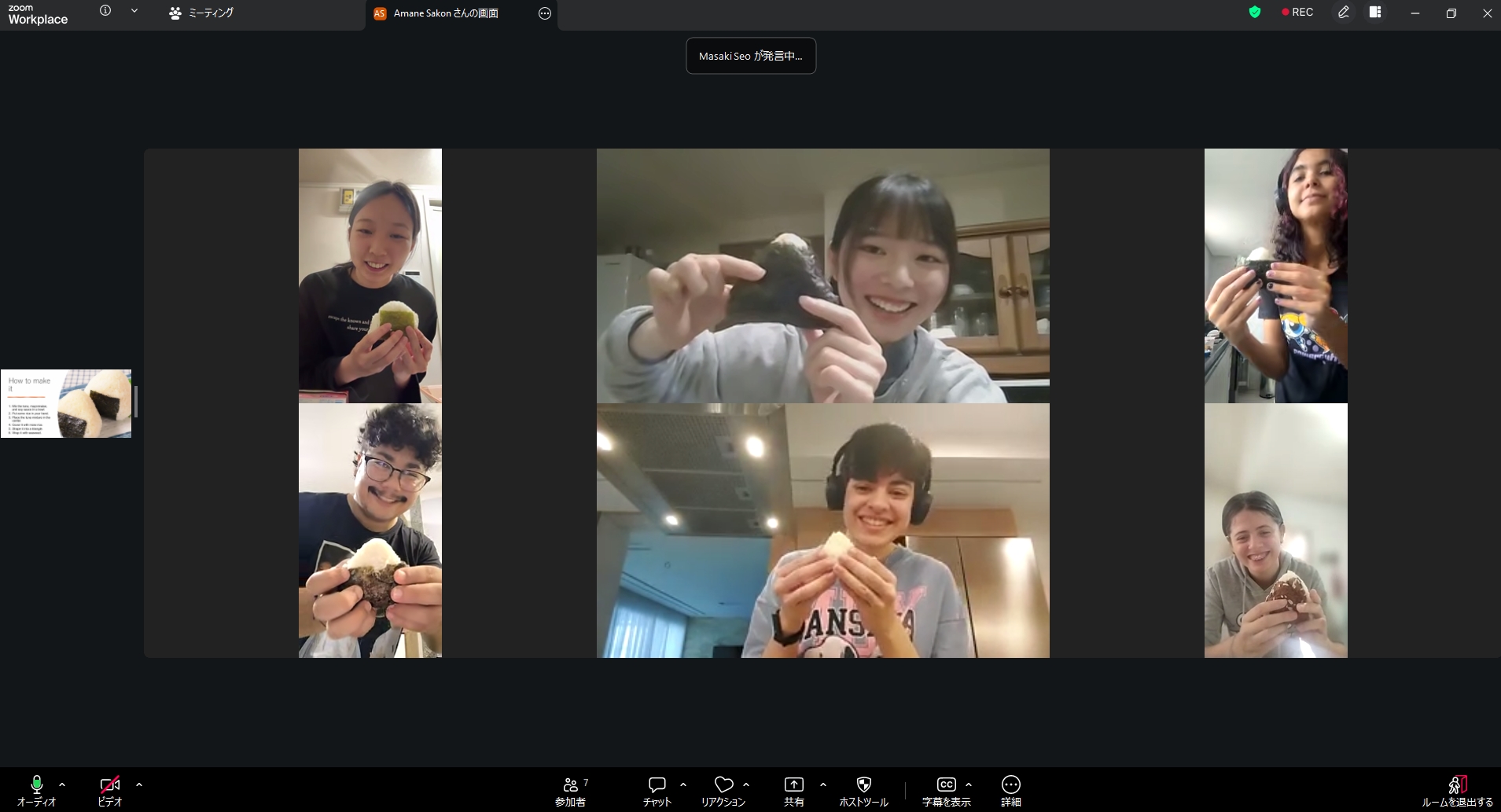
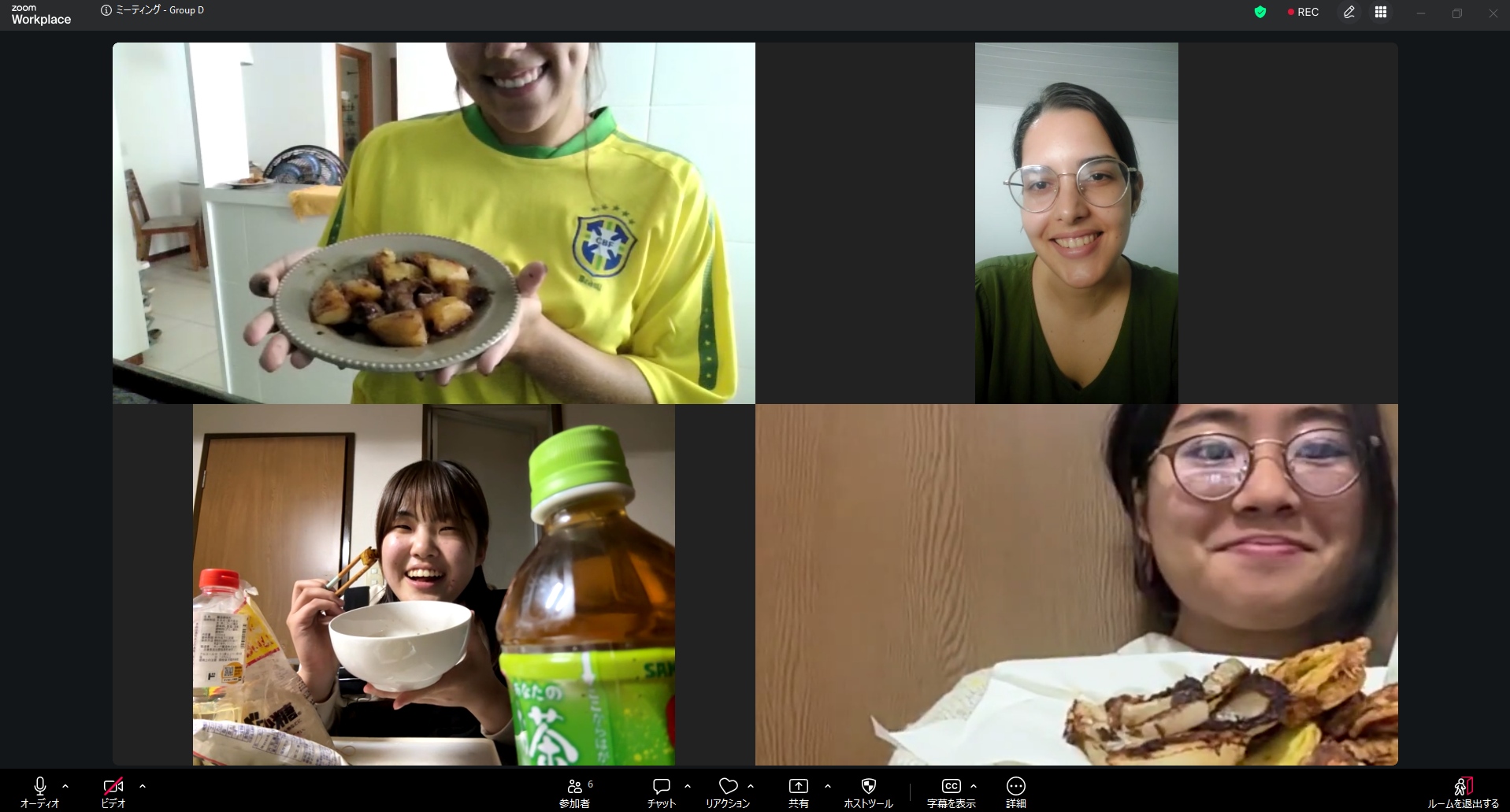
The main task of the day was for Japanese students to teach Japanese cuisine to Brazilian students. Working in small groups, students communicated online while cooking simultaneously.
🍳 The dishes prepared included:
Okonomiyaki
Tempura
Onigiri (rice balls)
Teriyaki chicken
Stir-fried liver and potatoes
Japanese students explained the ingredients and cooking procedures in English, while Brazilian students followed along and cooked in real time. Students encouraged each other throughout the process, saying things like, “That cutting style is perfect!” and “That looks great!”, creating a strong sense of connection despite being online.
Conversations naturally extended beyond cooking, with questions such as:
“When do people usually eat this dish?”
“Is this commonly made at home?”
These exchanges highlighted how food can deepen cross-cultural understanding in a natural and engaging way.
Cooking the same dishes at the same time helped bridge both the physical distance and the time difference, bringing participants closer together.
In upcoming sessions, roles will be reversed, with Brazilian students introducing their own cuisine. By alternating between “teaching” and “learning,” the project will continue to develop into a more interactive and reciprocal learning experience.
This initiative demonstrates how students can connect across borders through food and shared experiences. We look forward to seeing how their learning continues to grow and evolve.
🌎✨