


New information
Final Presentation of the “Business Communication” Class(Monday,July 13)
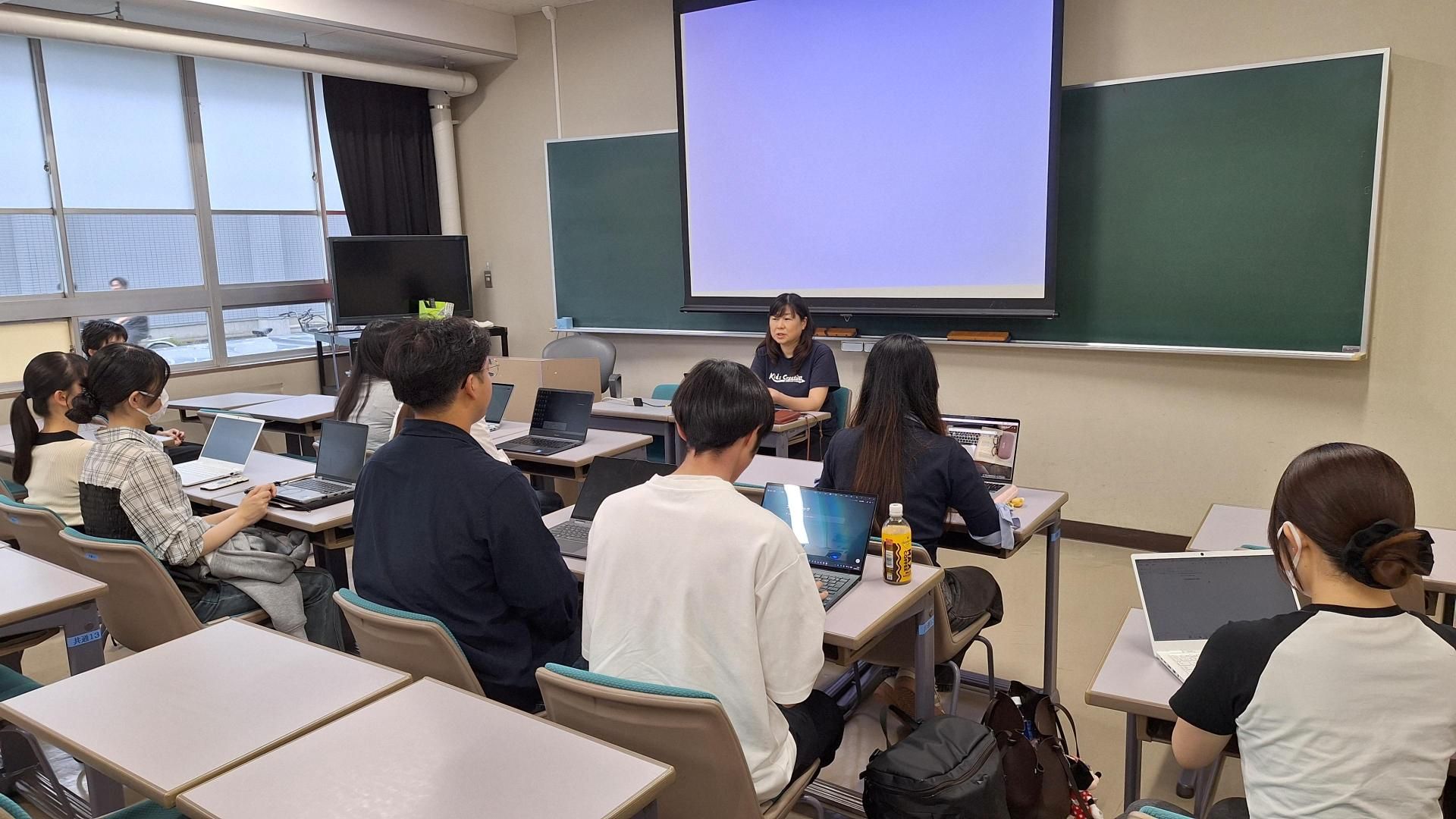
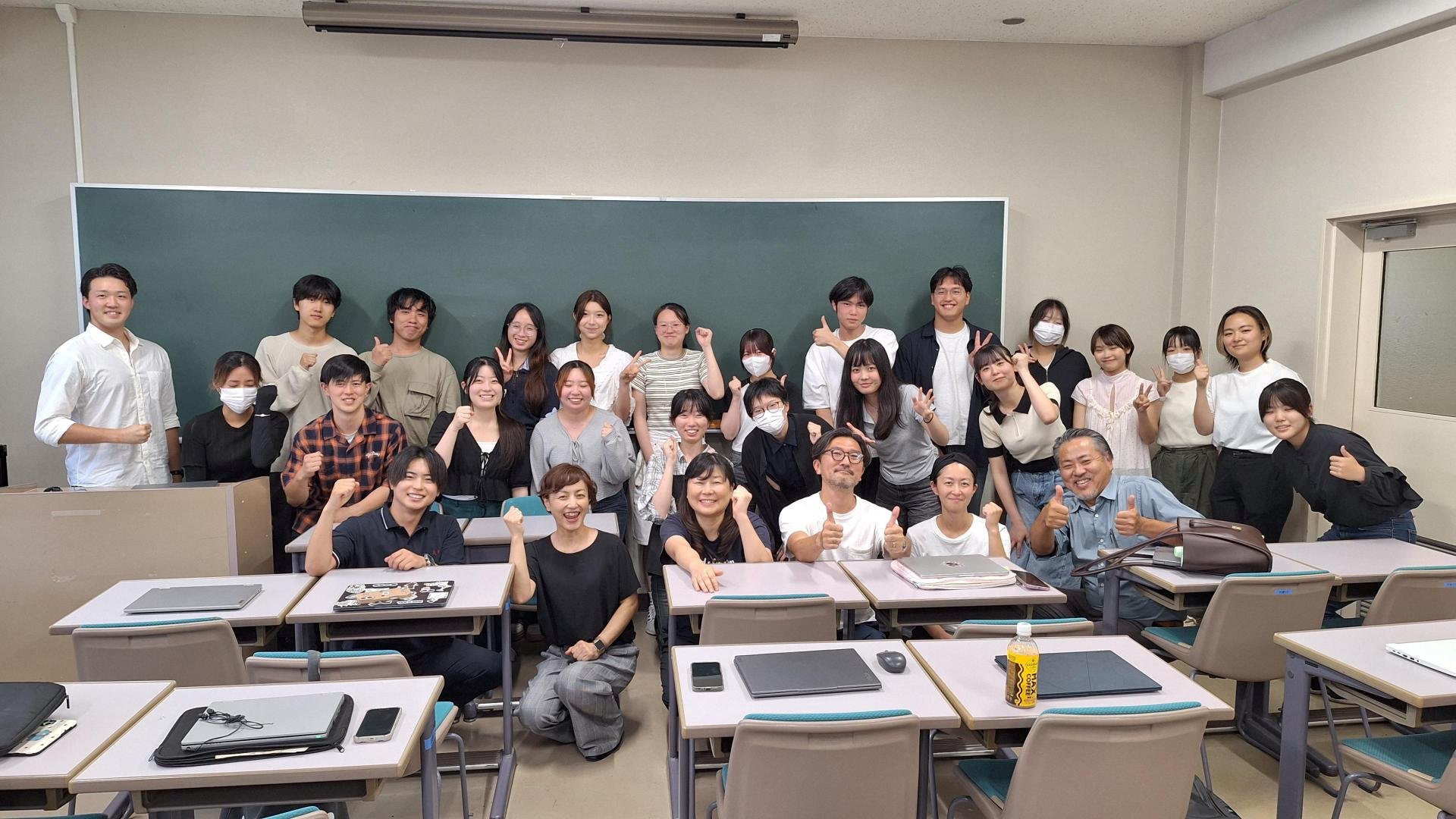
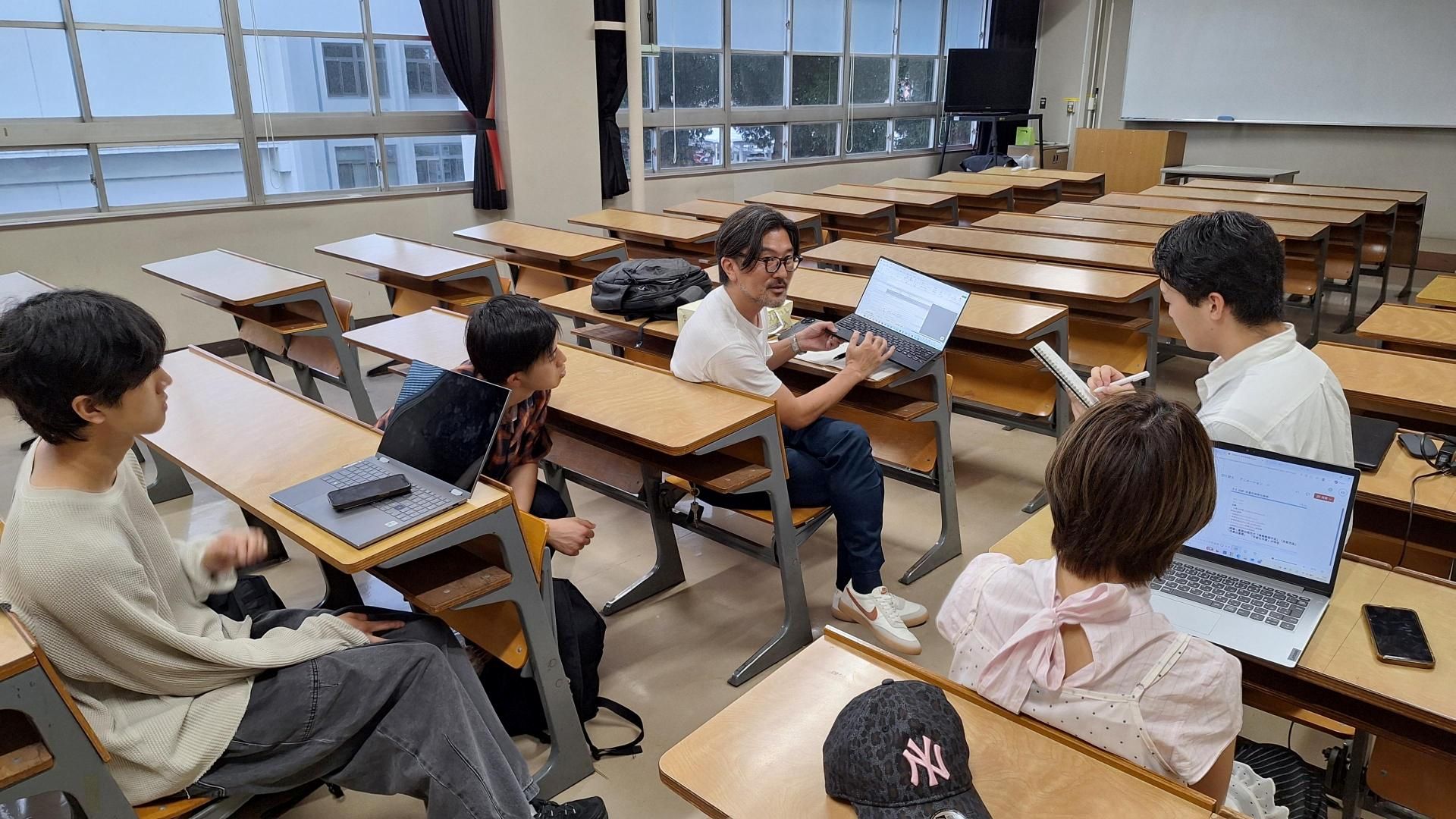
On Monday, July 13, 2026, the final presentation session for the Business Communication class was held. A total of 24 students, including 8 international students, participated in the class. Working in mixed teams of Japanese and international students, they tackled real-world challenges faced by local companies while developing practical skills in business communication, problem-solving, and project management.
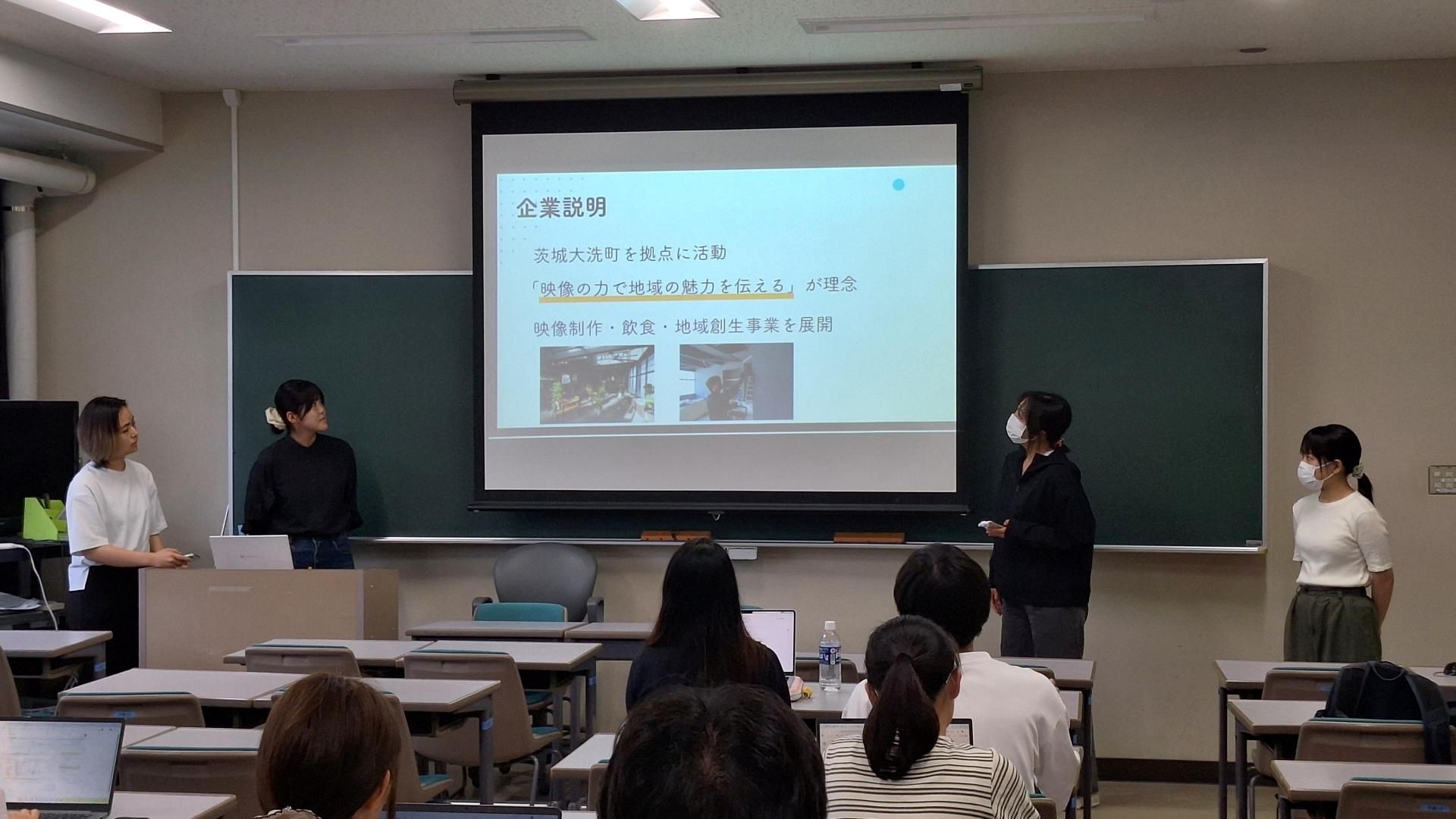
This year, four companies collaborated with the course: Kids Creation, KJ-NETWORK, PALUP, and Kikumasa Painting Co., Ltd. The final presentation session was attended by the business owners and executives of these companies, and students presented the outcomes of approximately three months of research, analysis, and proposal development.
The team working with Kids Creation focused on increasing student enrollment. They conducted surveys of parents and alumni and produced promotional video content highlighting the school’s unique features. The survey results revealed that, in addition to English education, the school’s emphasis on fostering children's independence and its rich natural environment were highly valued by stakeholders. Based on these findings, the team proposed improvements to the organization’s website and social media communication strategies.
The team assigned to KJ-NETWORK worked on increasing customer traffic to Le Lien, a café restaurant operated by the company in Oarai Town. Targeting women in their 30s and 40s, the students developed social media marketing proposals, including the use of Instagram Reels and improvements to the restaurant’s profile and highlight sections. They also suggested new initiatives such as afternoon tea services and local artisan product sales to further promote the café as a place where customers can enjoy a “special experience.”
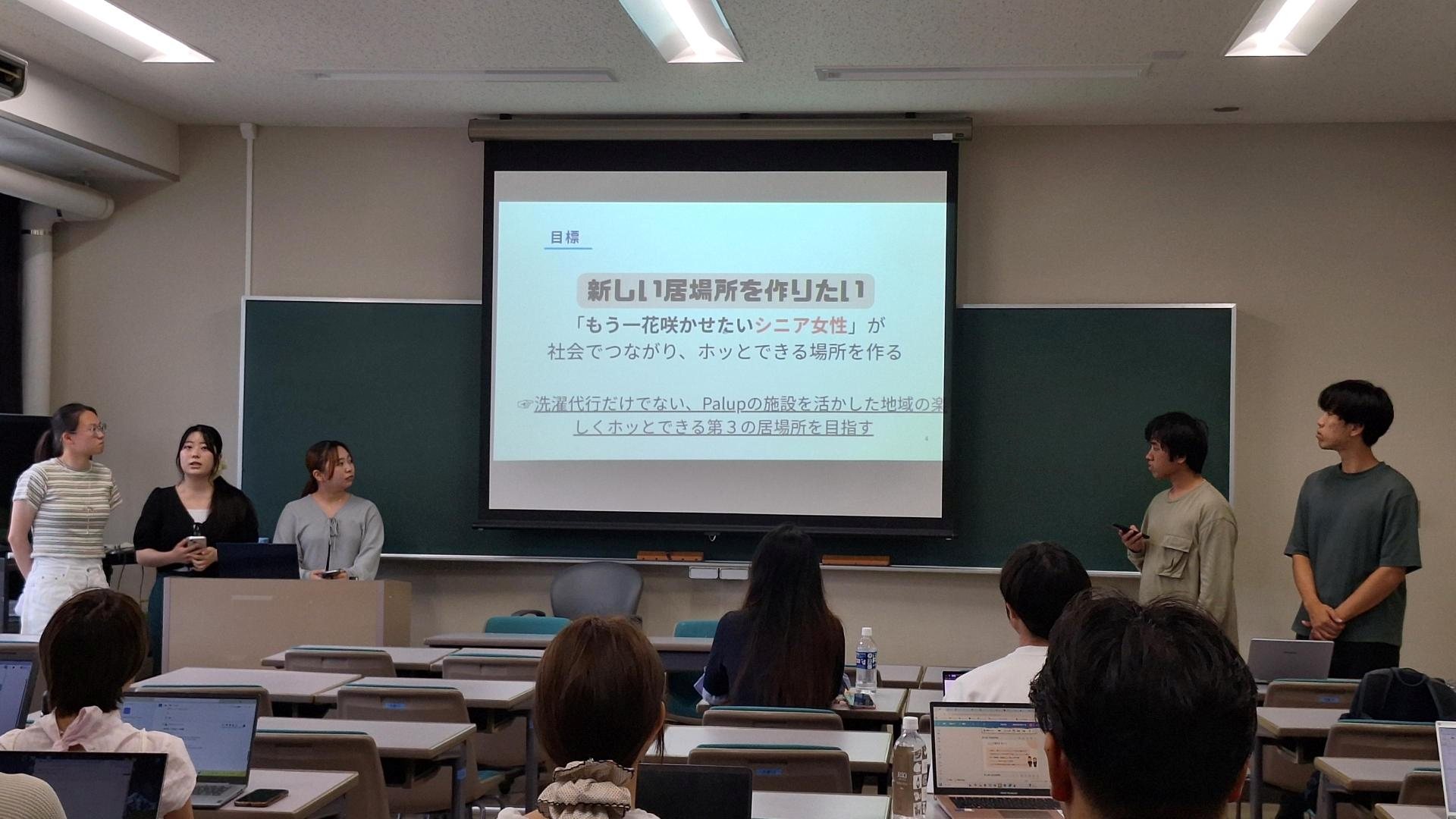
The team collaborating with PALUP explored ways to create a welcoming community space for senior women seeking new opportunities for social engagement. They designed event proposals that would bring together older adults and children through intergenerational activities, including programs that allow participants to experience age-related physical changes. Their ideas connected community-building initiatives with the company’s new business vision. Following the presentation, students and the company plan to continue working together to prepare for the implementation of the proposed event.
The team working with Kikumasa Painting Co., Ltd. investigated the company’s “7:3 Project,” an initiative aimed at developing leadership among employees. Through a survey of the company’s workforce, the students found that many employees were highly motivated to contribute to the company and take on leadership roles, while also expressing concerns about operational efficiency and the transparency of the evaluation system. The team proposed improvements in internal communication, workflow efficiency, and performance evaluation processes.
One of the distinguishing features of this course is that students engage directly with company executives and managers while addressing actual business challenges. Through company visits, meetings, surveys, and project planning, students were exposed to real-world issues that cannot be fully understood through textbooks alone.
Students commented that they gained valuable insights into the mindset of business leaders and the perspectives of company presidents. Many noted that they learned about challenges that organizations face in practice and experienced firsthand the complexity of finding solutions to problems with no single correct answer. Others emphasized that working directly with companies provided a highly practical and meaningful learning experience.
Students also learned the importance of sustained communication and understanding the circumstances of stakeholders and organizations when addressing business challenges. Beyond generating proposals, they experienced the difficulties of building trust, reaching consensus, and maintaining productive relationships with partner companies.
Another important aspect of the course was international collaborative learning. Japanese and international students worked together in mixed teams to address company challenges, allowing them to approach problems from a variety of cultural and personal perspectives.
Students reflected that they became aware that ideas and assumptions they had previously considered “normal” could look very different from another cultural perspective. Many appreciated the opportunity to encounter new viewpoints through discussions with international students and learned the importance of communicating clearly and effectively. They also reported developing the ability to work collaboratively toward a common goal with people from diverse backgrounds.
The course also encouraged students to think critically about characteristics of Japanese communication, such as reading between the lines and relying on implicit understanding. By working with students whose first language is not Japanese, participants learned to explain ideas more clearly and to communicate with greater attention to the perspectives and backgrounds of others.
During the final presentation session, company representatives provided candid feedback and advice on the students’ proposals. This offered students a valuable opportunity to reconsider their ideas within a real-world context. By combining collaboration with local businesses and international collaborative learning, the course provided a practical educational environment in which students could connect academic learning with society. The course will continue to promote experiential learning through partnerships with local companies and organizations.