


New information
Experiencing Vietnamese Culture Through All Five Senses: Students from “International Collaborative Learning (Vietnam)” Visit Ao Ba Ba(Sunday,July 19)
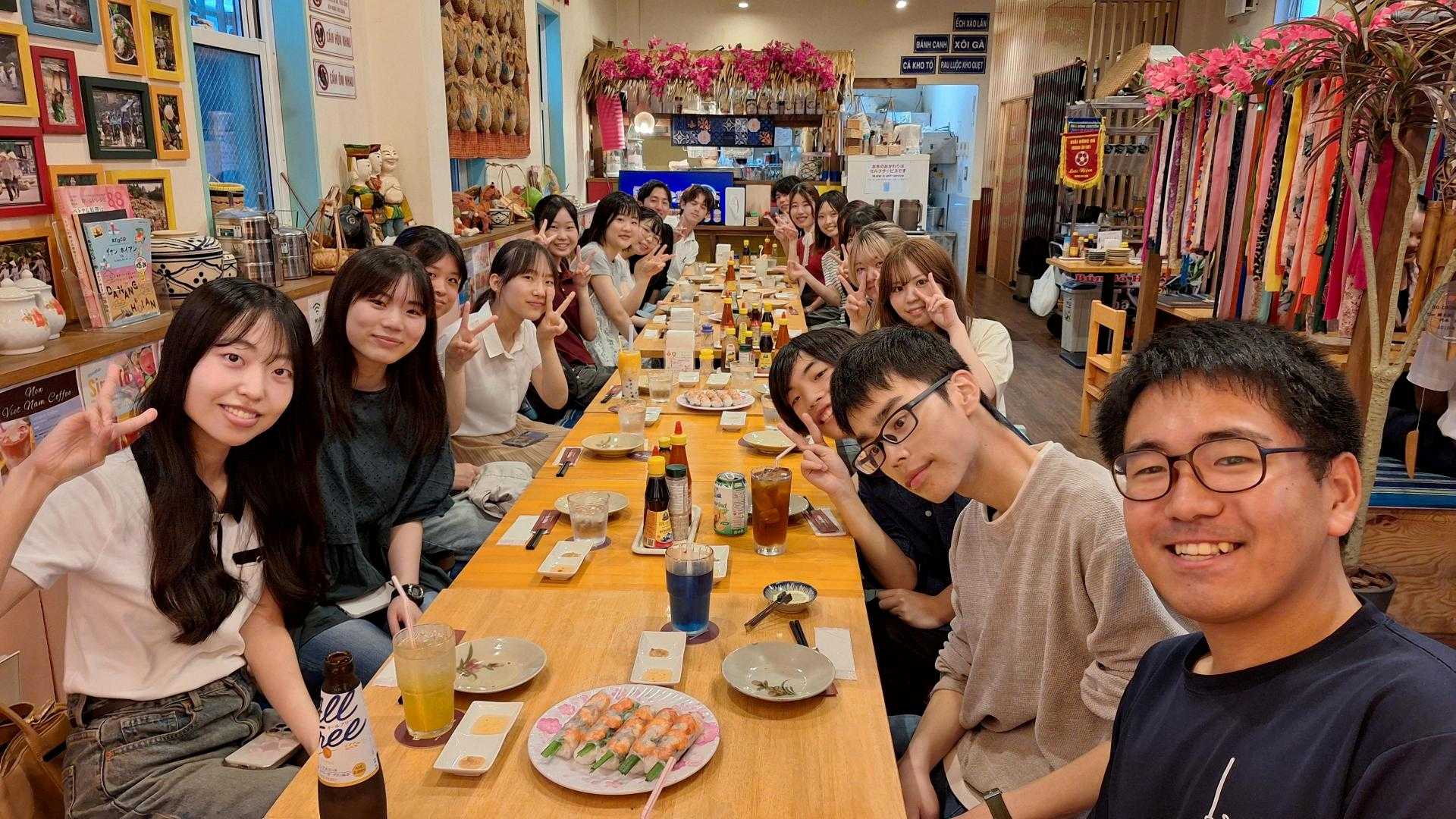
On the evening of July 19, students enrolled in the course “International Collaborative Learning (Vietnam)” visited Ao Ba Ba, a Vietnamese restaurant in Mito City, for a fieldwork activity that introduced them to Vietnamese food culture.
In this course, students participate in an international collaborative learning program with Hai Phong University in Vietnam through COIL (Collaborative Online International Learning). Through regular online interactions, they learn about Vietnamese society and culture, and this visit provided an opportunity to connect their online learning with real-world experiences.
During the visit, students enjoyed a variety of Vietnamese dishes, including fresh spring rolls (gỏi cuốn), fried spring rolls (chả giò), green papaya salad, phở, coconut coffee, and avocado smoothies. For many participants, it was their first time trying Vietnamese cuisine. Students commented that “all the dishes were new and exciting,” “it was my first time eating phở, and I found it very approachable for Japanese people,” and “the herbs and seasonings unique to Vietnam gave me a real sense of another culture.”
Among the dishes, phở was mentioned most frequently as the most memorable. Students were intrigued by the rice noodles and by the custom of adding lemon to change the flavor of the soup. Beverages such as avocado smoothies, coconut coffee, and tamarind juice were also highly popular, with some students describing them as “completely new flavors that are difficult to find in Japan.”
The atmosphere of the restaurant also left a strong impression on the students. Colorful lanterns, traditional decorations, Vietnamese-labeled condiments, and the staff’s attire all helped create an authentic environment. Many participants commented that they felt “as if they had traveled to Vietnam” and that the bright and welcoming atmosphere reflected the warmth of Vietnamese culture.
Through this experience, students also reflected on the similarities and differences between Japanese and Vietnamese cultures. They noticed common practices such as using chopsticks and sharing dishes around the table, while also discovering distinctive Vietnamese features such as the use of fresh herbs and fish sauce, as well as the vibrant interior design. Students further observed how the restaurant had adapted Vietnamese cuisine for Japanese customers, noting the approachable flavors, photo menus, and helpful explanations provided by the staff.
This visit offered a valuable opportunity for students to experience Vietnamese culture firsthand through food, space, and interpersonal interactions. By engaging with another culture through all five senses, they deepened their understanding of Vietnam and gained new insights that will contribute to the Vietnamese Culture Introduction Event scheduled for August 29.